Daylight Savings is Gone for Now; 8 Stages of Yoga Nidra: Entry
Laurie Tenzer | NOV 8, 2021
yoga nidra entry
yoga nidra
standard time
Daylight Savings is Gone for Now; 8 Stages of Yoga Nidra: Entry
Laurie Tenzer | NOV 8, 2021

Early this past Sunday morning, we fell back to Standard Time on most of the mainland U.S. and some countries around the world. For some of us, it feels exactly like jet lag. Technically, it is jet lag. It is as if you traveled across one time zone adding in an extra hour. So it is no surprise if you feel a bit sluggish or not yourself this week. You may feel that your morning seems much longer than normal since the sun seems to be coming up earlier again. The circadian rhythms of the body have been interrupted. Circadian rhythms are controlled internally via certain hormones, but affected by external factors.
These hormones react to sunlight and we need to give our bodies time to readjust. Even though you may have gotten that extra hour of sleep, yesterday morning, your hormones may still be out of whack due to your body's reaction to the new environmental norm. We have the power to adjust our circadian rhythms by adjusting some of our behaviors to make a smooth transition.

The Mayo clinic recommends adjusting your internal clock gradually by:
Lastly, I recommend a dose of Yoga Nidra. It can be just what to get your rhythms back in alignment. Studies have shown that 1 hour of Yoga Nidra is the equivalent of about 4 hours of sleep (Desai, 2017). In theory then, your yoga nidra practice can help you to more quickly recover from the time change. Register here for tonight's class.
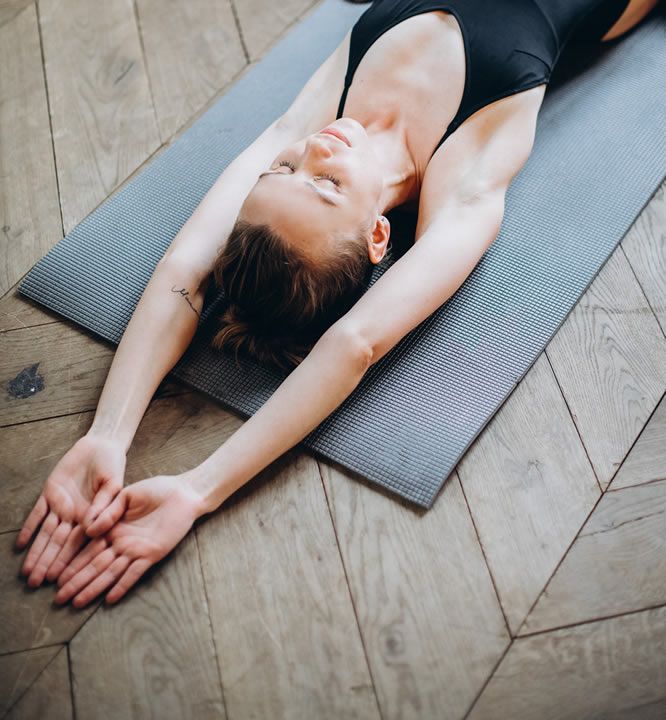
Divine Sleep® Yoga Nidra is a style of yoga nidra in which I have most of my teacher training with the creator, Jennifer Reis. Thus, it serves as the basis for most of my yoga nidra classes. This type of yoga nidra incorporates 8 distinct phases using several types of meditation. Over the next few weeks, I will describe each phase and what happens in that stage. This week, I address the first stage: Entry.
This is the very beginning of your yoga nidra practice. Entry is the first stage. It is the stage where you start acclimate to a meditative state. You get as comfortable as possible and finding the position that is the right one for you. You get your pillows, blankets, towels, bolsters, etc. just where you want them. Wiggle around and settle in a little more.
The entry is a meditation that helps you to let go of the busyness of your life and release both mind and body. In this phase you may be prompted to focus on a full body stretch, a simple breathing exercise, and/or a sensation exercise such as listening to sounds around you. In this stage we recognize the first sheath, annamaya kosha, the physical body (See earlier blogs for information on this sheath). Here we get the body ready to let go using relaxation techniques. Before moving on to Stage 2: The Sankalpa or Heart's Intention.
Resources:
Desai, K. (2017). Yoga Nidra: The art of transformational sleep. Twin Lakes, WI: Lotus Press.
Howland, J. Mayo Clinic (2019). Mayo Clinic Minute: Adjusting for the end of daylight saving time https://newsnetwork.mayoclinic.org/discussion/mayo-clinic-minute-adjusting-for-the-end-of-daylight-saving-time/
Northwestern Medicine. (2021). The surprising side effects of time change. https://www.nm.org/healthbeat/healthy-tips/effects-of-daylight-saving
Reis, J., (2011, 2018), Divine Sleep® Yoga Nidra teacher training manual. Private publication.
Credits:
Image by senjakelabu29 from Pixabay
Photo by Elina Fairytale from Pexels
Laurie Tenzer | NOV 8, 2021
Share this blog post
 OfferingTree