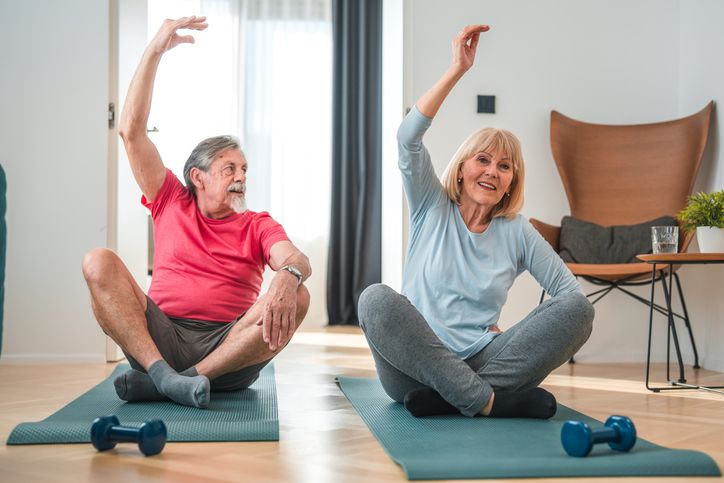
During this past weekend, I had the pleasure of teaching a yoga class for active seniors. It was in a lovely setting and the people could not have been more enthusiastic and nicer. One or two were a little nervous because it was their first time doing yoga. This experience set me to thinking about what it is like to be a new yogi.
My first experience with yoga was sparked when I saw Sting, the musician, about 15 years ago in Vanity Fair Magazine doing some awesome yoga poses. I wanted to be able to do some semblance of that -– never imagining that I really could.
Here are some considerations to help you make the decision to start a yoga asana (movement) practice.
Prior Experience: If you have never done yoga postures before, don't let that hold you back. You have to start somewhere, and the beginning is usually that place.
For those who are new to yoga, find a class where the teacher gives you the basics, including foundational poses, bodily alignment, and breath techniques. If you cannot find a beginner yoga class, find one where the teacher teaches or is credentialed in Accessible yoga. That is, yoga for everyone. Accessible yoga is yoga to meet your needs with whatever you bring to your mat. In an accessible class, the teacher will help to accommodate your requirements whether you are a beginner, have a physical limitation, or have a 6-pack body that needs to be loosened up.
Not Too Fit: If you have been physically inactive for some time, this is a good time to reassess your physical needs. Starting with a gentle or beginner yoga practice might make you sore for the next day or two, but soreness is that good kind of pain. It means you worked muscles and joints you haven't worked in a long time. You may then find that you want to take another class the next day. You want to keep moving. That's what happened to me when I went back to yoga after a bit of a hiatus!
Yoga is Ageless: As we age, the body hurts more and takes a little longer to recover. That’s normal. Yet with yoga, we may discover that our bodies are more capable than we ever thought possible. The key is to keep moving it, and yoga is one of the very healthy ways to do just that. A doctor once told me that yoga can be done during your entire lifespan. Just modify. I did not disagree with him. You can do yoga to age 100 and beyond, using modifications that continuously make it accessible.
Somewhat or Very Fit: If you are already physically active and have a good level of fitness, you might feel comfortable trying yoga on your own with YouTube videos. However, remember that yoga can be physically challenging, unless it is tailored to your needs.
Health Conditions: If you have any medical conditions, injuries, or physical limitations, it is essential to consult with your healthcare professional before starting any new physical activity including yoga. Be sure to inform your yoga instructor if you have these medical concerns. That way they can know what poses to give you to accommodate your specific needs.
Commitment: If you're unsure about your commitment to yoga, try a single beginner or gentle class. Both are slow, and it is one way to gauge your interest before investing in a long-term commitment or purchasing equipment like a yoga mat. Commit to take at least three classes before making a decision to continue. Some perceive gentle yoga as boring, but when you allow it to calm your mind, you may have the opposite reaction. (There are Power Yoga or Ashtanga classes that may suit your impatience better, but not fitness level). In other words, make a commitment to be patient.
Learning the Basics: In a beginner class, you'll learn the fundamental postures, proper alignment, and breathing techniques. This foundation can be beneficial if you plan to practice yoga regularly, as it will help prevent injuries and improve your practice over time.
Safety: Yoga, when done incorrectly, can lead to injuries. A class led by an experienced instructor can help you practice safely and reduce the risk of injury.
Don't worry. Start at the beginning. Then start again – and again.
In most cases, starting as a beginner yogi in an accessible gentle or beginner class is a wise choice. It ensures you learn the basics and build a strong foundation for your practice. Yoga is a journey of exploration through your mind, body and breath. Once you feel more comfortable and understand you will better understand your body's strengths, needs and limitations.
 OfferingTree