Sankalpa in the New Year
Laurie Tenzer | DEC 26, 2022
sankalpa
intention
new year
resolution
Laurie Tenzer | DEC 26, 2022

I hope that your holiday season is one of joy and intention. Since many of us make resolutions in the New Year, it is a great time to review the topic of intention or sankalpa. While somewhat related to a New Year's resolution, the sankalpa takes a very different approach, and, some would say a more powerful approach. Throughout this article I use the words sankalpa and intention interchangeably.
Some translate the Sanskrit word sankalpa as a resolution or resolve. Yet, the sankalpa is much deeper and impactful in our lives than a resolution. Another translation, which is the one I favor, is: "a vow to connect to your highest truth." Rather than coming from a negative ego-driven space in one's mind ("I have to lose 20 pounds"), the intention comes from a place that is set in a positive statement and stated as if it is already happening. (Example: I move healthily and joyfully through my life). The sankalpa statement is something that becomes implanted into our beings and our daily ways of behaving.
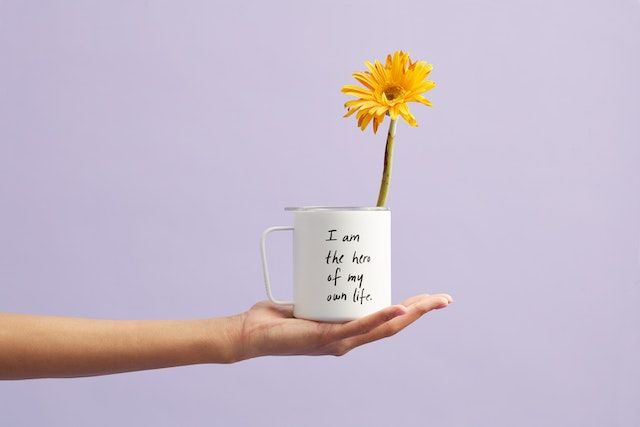
Eighty percent of those who make New Year's resolutions do not keep them not even through the fifth week of the new year (Luciani, 2015). Where a resolution has to do with goal-setting and the ego, the intention is generated from the heart's desire or inner joy (McGonigal, n.d.). An intention (sankalpa) helps you to plant a seed to make the life changes that you want and need. The sankalpa is the seed that will grow and blossom to satisfy the existence of the wants and needs of your life. A sankalpa is very personal and driven from internal factors rather than external ones.

For example, a typical New Year's resolution would be, "I am going to lose 20 pounds by my son's wedding in April." This is a healthy goal, but difficult to manifest in real life since it arises from external pressures, society, and the ego. You follow through with some lifestyle changes, throughout January and February, but you're still not happy where you are in March. So, you beat yourself up for no good reason and say "hell with it" and proceed onto self-punishment by stopping care of yourself, making things worse. We can think of the resolution as a dream for a different future that does not take into account our present reality or who we really are.
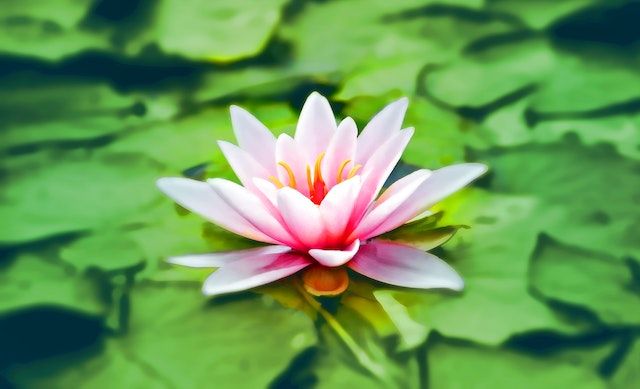
As an intention you might state your sankalpa instead, "I eat and exercise to take care of me" or "I move through life healthy and at peace with myself." Here, the parameters for weight-loss are more natural and unconstrained. Notice that the sankalpa is said in the present tense as if it is already happening. An intention that springs from your heart's inner joy makes it easier to continue forward in your everyday health...even beyond that fancy wedding. There is no self-punishment involved, because the sankalpa comes from your heart's deepest joys. That is, it springs not from who you want to be in the future (20 pounds lighter), but rather from who you really are. The sankalpa springs from the essence of your being.
The point is: your personal intention can better lead to your personal success.

First, listen to your heart's desire, the joy that shines a light deep within. Allow something from your true nature to arise. It is best to do this during a meditation. Never force a sankalpa, it will be there when you find it. Let it come to you when it is ready. Sometimes it can take a while. Be patient with yourself. Simply allow it to come to you organically from the joyfulness that exists within you. At some point, your heart will find space to allow you to dig beneath the surface. You will find your intention there and ready to plant the seed.
You are planting a seed with your sankalpa. The sankalpa is your very own seed that takes root and blossoms into a full-bodied plant. The sankalpa allows one to do as much or as little self-care as you intend. The sankalpa is a key component of the Yoga Nidra practice. If you would like a bit more experience and instruction with sankalpa and intention-setting, we cover it in every Yoga Nidra class.
Resources & Further Readings
Birtles, K. (2020). Exploring the History of New Years Resolutions
Luciani, J. (2015). Why 80 Percent of New Year's Resolutions Fail in US News & World Report
McGonigal, K. (n.d.). How to Create a Sankalpa. From Yoga International.
Laurie Tenzer | DEC 26, 2022
Share this blog post

 OfferingTree