Swollen Feet. Swollen Ankles, Swollen Legs
Laurie Tenzer | AUG 14, 2023
inversions
swollen feet
swollen ankles
swollen legs
Swollen Feet. Swollen Ankles, Swollen Legs
Laurie Tenzer | AUG 14, 2023
Before trying anything discussed in this article, check with your medical professional first before following any of the guidelines and suggestions described below. Swollen feet can be a sign of serious illness. So get it checked out to rule out heart disease, liver disease and others.
Swollen feet can be caused by a host of issues in the body. Congestive heart failure, blood clots, deep vein thrombosis, among others (Lewine, 2023).
In my experience, the doctor usually runs a few tests. After reviewing test results, they tell you the causes of your swelling problem. He or she then helps you to fix that serious condition with some sort of intervention. When the doctor says, "it's none of these serious causes, but I don't know the cause" it is then time to take charge of your health by addressing the symptom. The symptom is fluid in the lower extremity, which can sometimes be painful.
Harvard Medical School (Lewine, 2023) provides these tips for minimizing swelling in the lower limbs.
Harvard Medical School (Lewine, 2023) provides these tips for minimizing swelling in the lower limbs.
In my experience, propping up your feet is all well and good. And yet, I found that it is not enough. There is a very important number 8 missing from Harvard's list. It is a yogic solution. If your medical professional okays it, do all seven items in this list. Also, do Number 8 any one of the methods described below.
8. Do inversions at least 5 minutes daily.
Number 8 refers to inversions. You may ask, "What is considered an inversion?" An inversion means that the legs are above the heart. There is "above your heart" as when you prop the feet up with pillows (#7) and then there "is waaaay above your heart. Waaaayy above your heart is the direction of this discussion.

This can be done in a several ways.
The fastest way is via a headstand. Holding headstand for about five minutes a day can keep the fluid buildup in your feet and help circulate it through the body. Even though it is the fastest way to get into the inverted position, many are unable to do it for several reasons, some physical, some mental. And that is fine. We have other solutions for you. Headstand is considered an advanced pose in yoga. So, let's modify. Modifications will take us on a spectrum from difficult and a little bit scary (headstand), to easy and relaxing (legs up the wall). So, keep reading and select one that is right for you.

You can try modifications. My favorite modification, the one I use daily, incorporates a prop known as a headstand stool. A headstand stool protects strain on the neck with the luxury of using your core muscles to get up side down and staying there for at least five minutes. When the liquid is really bad you may even be able to feel the trickle of fluid down toward the torso. This may signify that the liquids in the feet are now distributing themselves to other parts of the body.
If you are a bit less adventurous, another option is Legs Up the Wall. Legs Up the Wall is a fabulous restorative pose. You may have done this at the end of your yoga class instead of traditional savasana. To do Legs Up the Wall, come to a comfortable seated position with one hip touching the wall.
Then lay the side of the torso on the floor. Knees are bent and you will find yourself in a fetal position lying on your side. Keeping that hip as close to the wall as possible, roll on over to your back and take your legs with you as you roll and swing the legs up against the wall. . (Be sure you have enough clearance.) You may want to adjust your legs so that you can get as close as possible with your buttocks and back near the wall. Adjust your legs so that they are more or less straight.
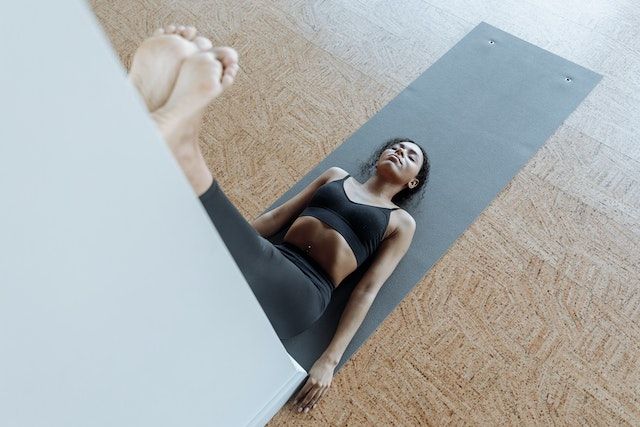
Lastly, if you don't have a wall available, while lying flat on a yoga mat or bed, lift both legs towards the ceiling with toes pointing toward the torso. Bottoms of the feet facing toward the ceiling as if you were standing on it. You may use your hands behind the thighs if you need some support.
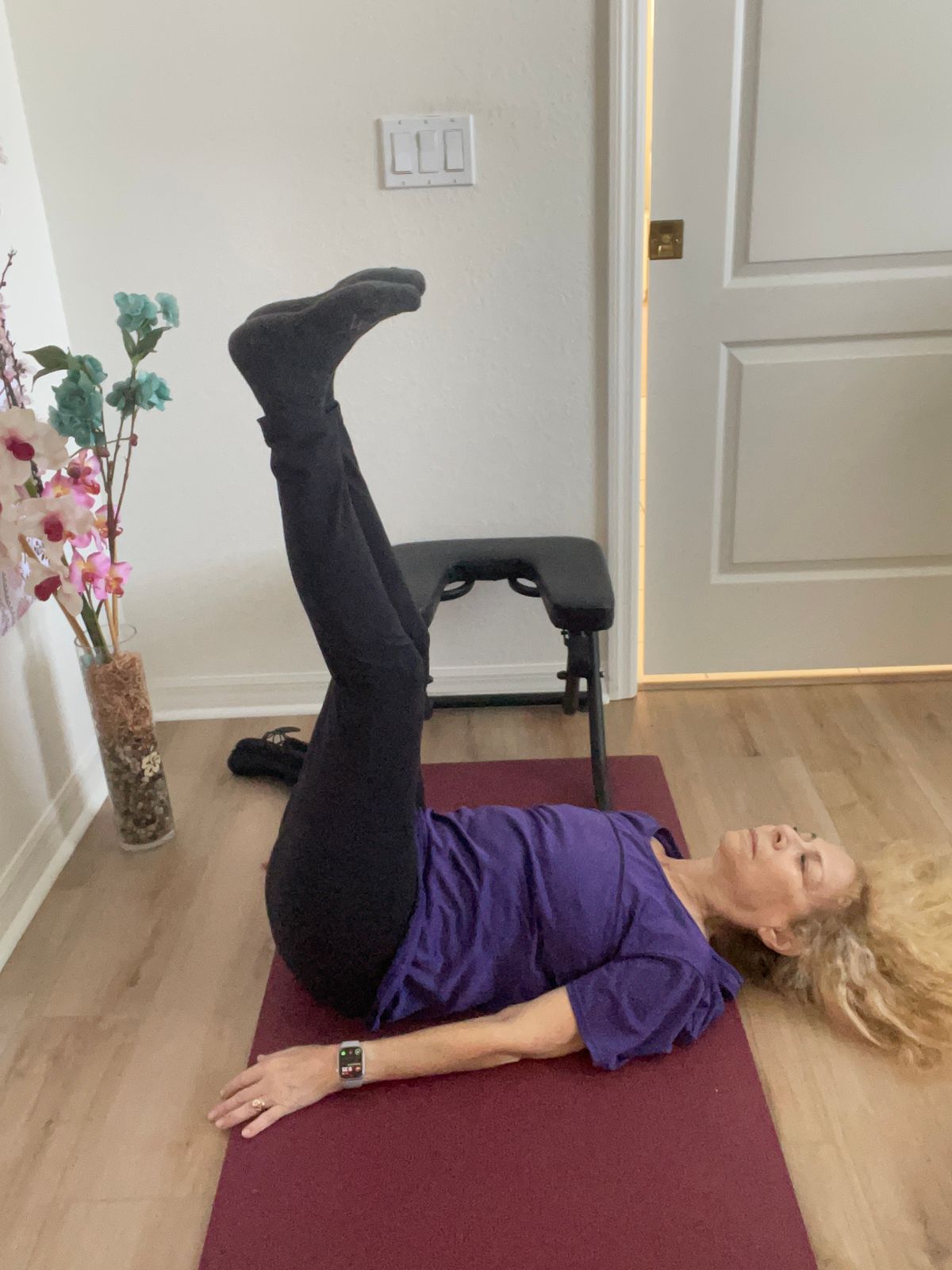
Whichever inversion style you choose, do it for at least five minutes a day. Experiment with different timings. You can even do 1-minute sessions five times a day. Learn about your body and listen to it. Do what it needs so you can make your body work optimally with whatever resources you have.
Medical Disclaimer: Always check with your doctor before embarking on any program that involves movement.
Resources and Other Readings
LeWine, H.E. (2023). Harvard Medical School. What's causing swollen feet and ankles?
McCallum, K. (2022). Why are my feet & ankles swollen. Houston Methodist.
Laurie Tenzer | AUG 14, 2023
Share this blog post
 OfferingTree