Winter Solstice
Laurie Tenzer | DEC 18, 2023
winter
winter solstice
Winter Solstice
Laurie Tenzer | DEC 18, 2023
The southern hemisphere is currently transitioning from Spring to Summer. In the north, we are moving from Fall to Winter. Because of these differences in hemisphere, the Winter Solstice is officially called the December Solstice and the Summer Solstice the June Solstice. When you think about it, these words nicely cover the entire globe. Here I will use the term Winter Solstice to define what we are experiencing here in the north.
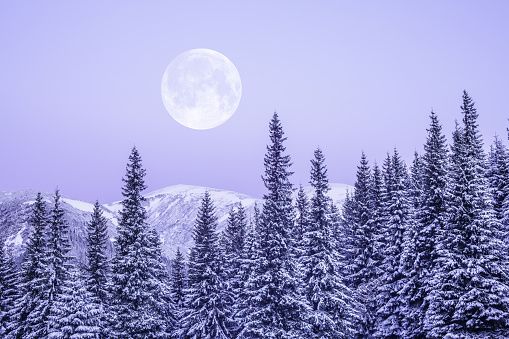
Whether it is a Winter Solstice or a Summer Solstice, solstice is where the sun seems to be immobile when viewed from earth. This occurrence happens when the sun is either at the highest point or lowest point in the sky. Astronomers of long ago chose a Latin portmanteau to name this phenomenon solstice: sol (sun) and sistere (to stand still). The sun is at its lowest point in the sky during Winter Solstice and the night darkness is the longest of the year (Franklin Institute, 2023).
Indigenous societies each have their ways of celebrating the turn of the seasons and recognizing the earth's journey around the sun throughout the year. It is no accident that these celebrations happen at the Winter Solstice.

Solstices call for celebrations in many different cultures. These traditions have been celebrated since prehistoric times. Christmas is but one holiday that has its roots in the Winter Solstice. Christmas celebrations take many of their traditions from ancient Rome's Winter Solstice celebration, Saturnalia. Saturnalia was a one-week celebration lasting from December 17-23. Over time, Christmas was moved to December 25 (Nothaft, 2012).
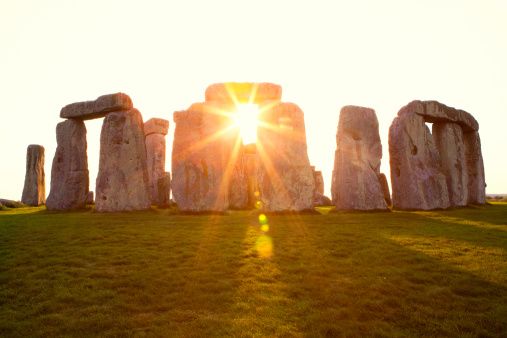
There is evidence suggesting that Stonehenge at England's Salisbury Plain has measured Solstice as a celebration of the rebirth of the sun since pre-history (Johnson, 2008).
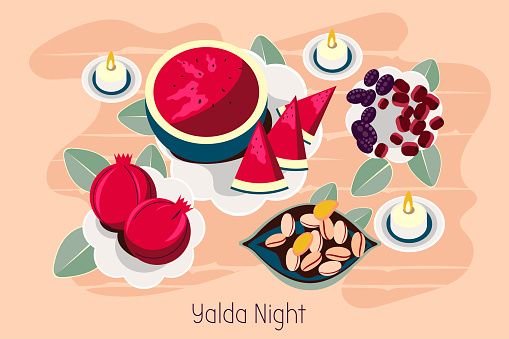
Shab-e Yalda is a holiday celebrated in Central Asia with roots in Persia. During the long night, a book by the ancient poet Hafez is read as a bit of fortunetelling. Family members sit together telling each other stories (Deravian, 2021).
International Yoga Day happens to fall on the June solstice so we celebrate with multiple sun salutations and other rituals. But what about now in the December solstice?
Yoga is so very intertwined with the earth: 5 elements, 4 seasons and the other physical things that surround us. These physical changes on the outside can help us to realize changes on the inside. Thus, it is important to examine our relationships to the seasons. In this case, Winter.
The Winter season is about the absence of light and the coming of light on the Solstice.
What is so lovely about the longest night of the year, is that by the next day, the light starts lengthening the days again, giving us hope as lightness slowly refills in our lives signaling rebirth.
With the Winter Solstice yoga we first surrender to the darkness. We let it all go and turn inward by grounding ourselves to the earth. Surrendering to the darkness means going deeper with earth-facing poses such as child's pose, downward facing dog, table top and/or sphinx among others.

Outwardly opening up to the light, we use our sun salutations to welcome the light of the sun back in. This relationship between earth and sun within our bodies is at the very essence of yoga.
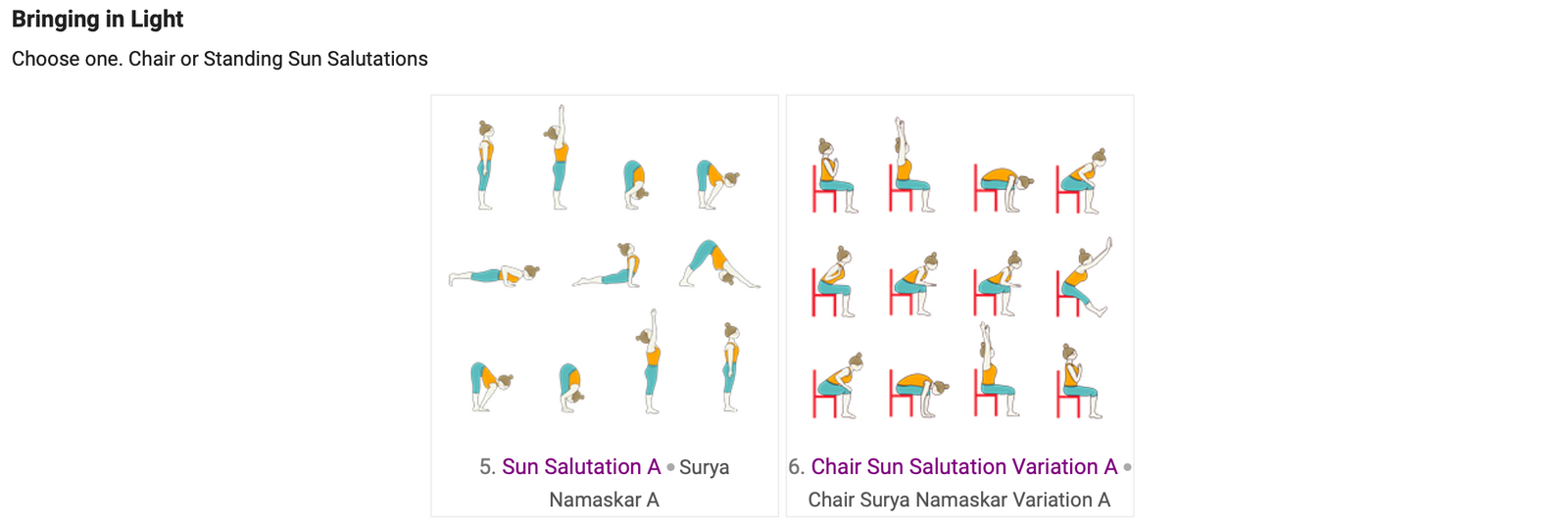
Thus, we surrender ourselves to the darkness of Winter as we begin to let the light through.
All pose images are copyright by Tummee - sequencing platform for yoga teachers.
Safety Information: You may want to consult with a qualified yoga teacher before trying any of the above poses.
Before engaging any new movement regimen, consult with your healthcare provider first.
References & Other Sources
Deravian, Naz (6 December 2021). "Welcoming Brighter Days on Yalda With Pomegranates". The New York Times. Archived from the original on 3 January 2022.
Franklin Institute (2023). What Is a Solstice and What Is an Equinox (and Why Should I Care)? https://www.fi.edu/en/blog/what-solstice-and-what-equinox-and-why-should-i-care
Johnson, A. (2008). Solving Stonehenge: The New Key to an Ancient Enigma. Thames & Hudson. pp. 252–253. ISBN 978-0500051559.
Nothaft, C. P. E. (2012). "The Origins of the Christmas Date: Some Recent Trends in Historical Research." Church History. 81 (4): 903–911.
Laurie Tenzer | DEC 18, 2023
Share this blog post

 OfferingTree